
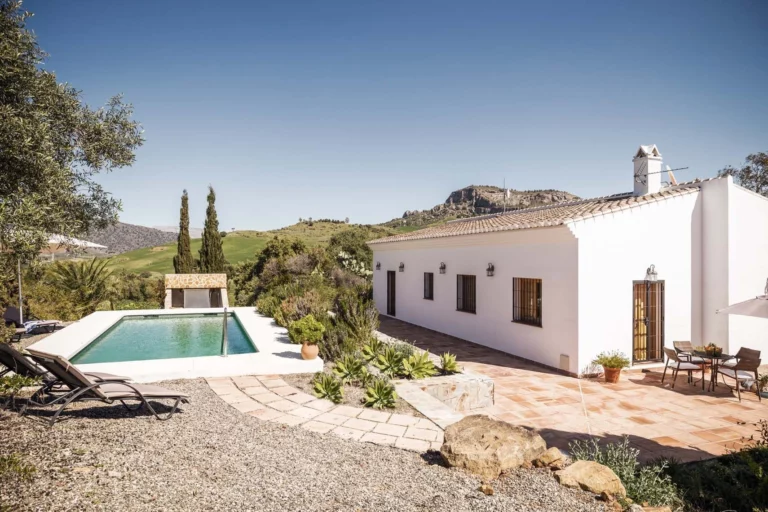
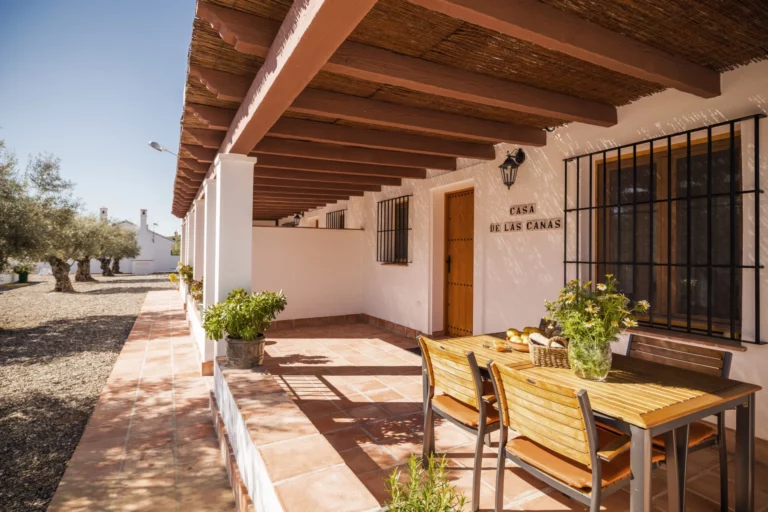
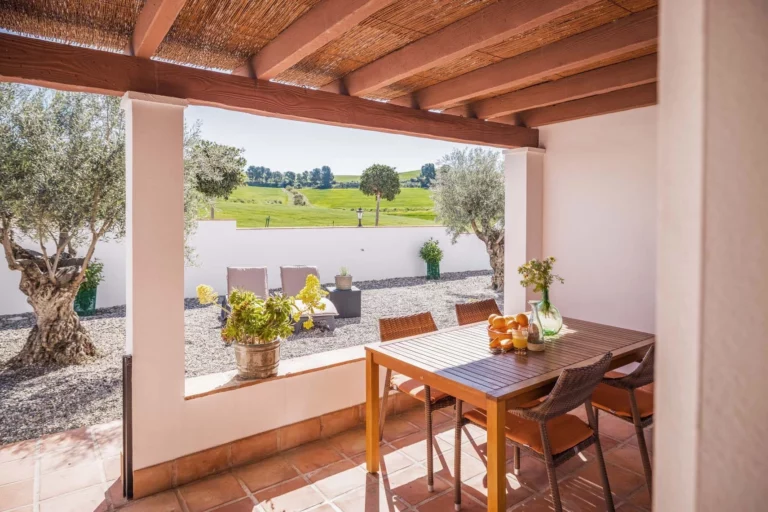
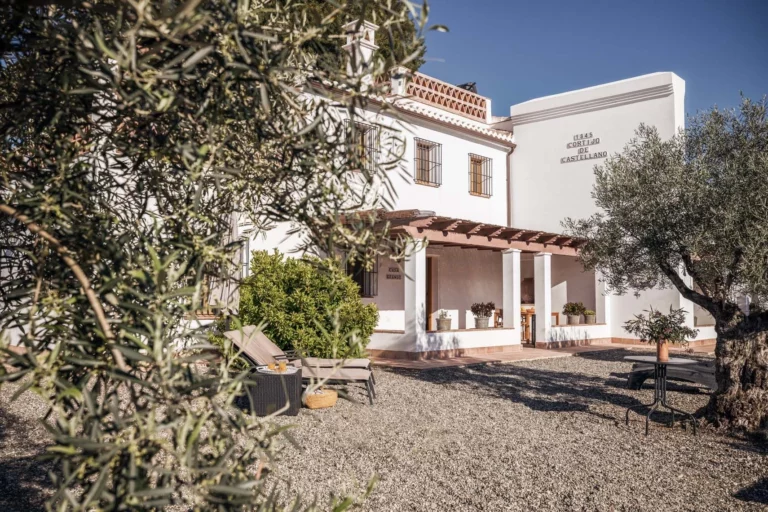
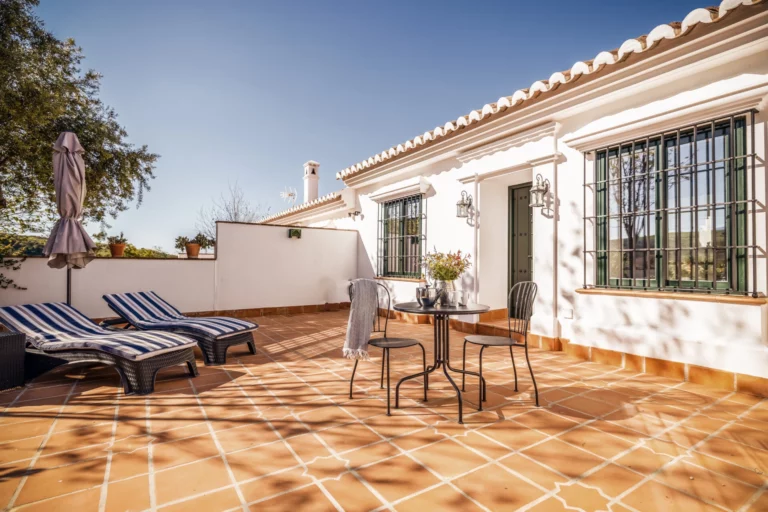
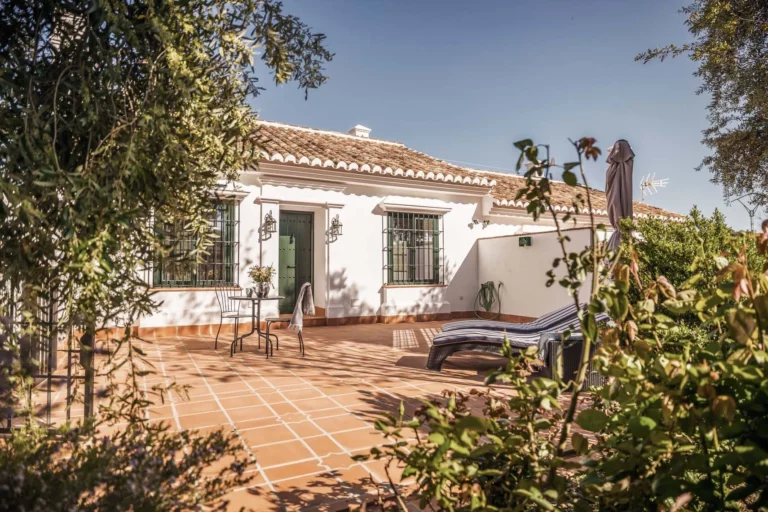
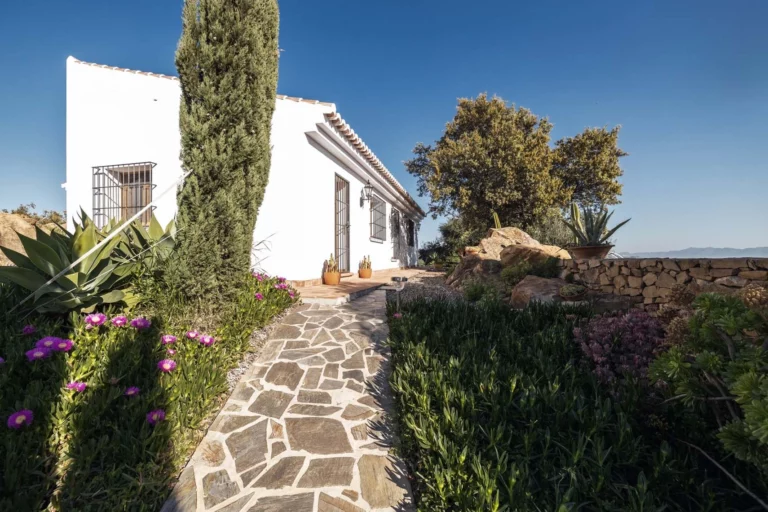
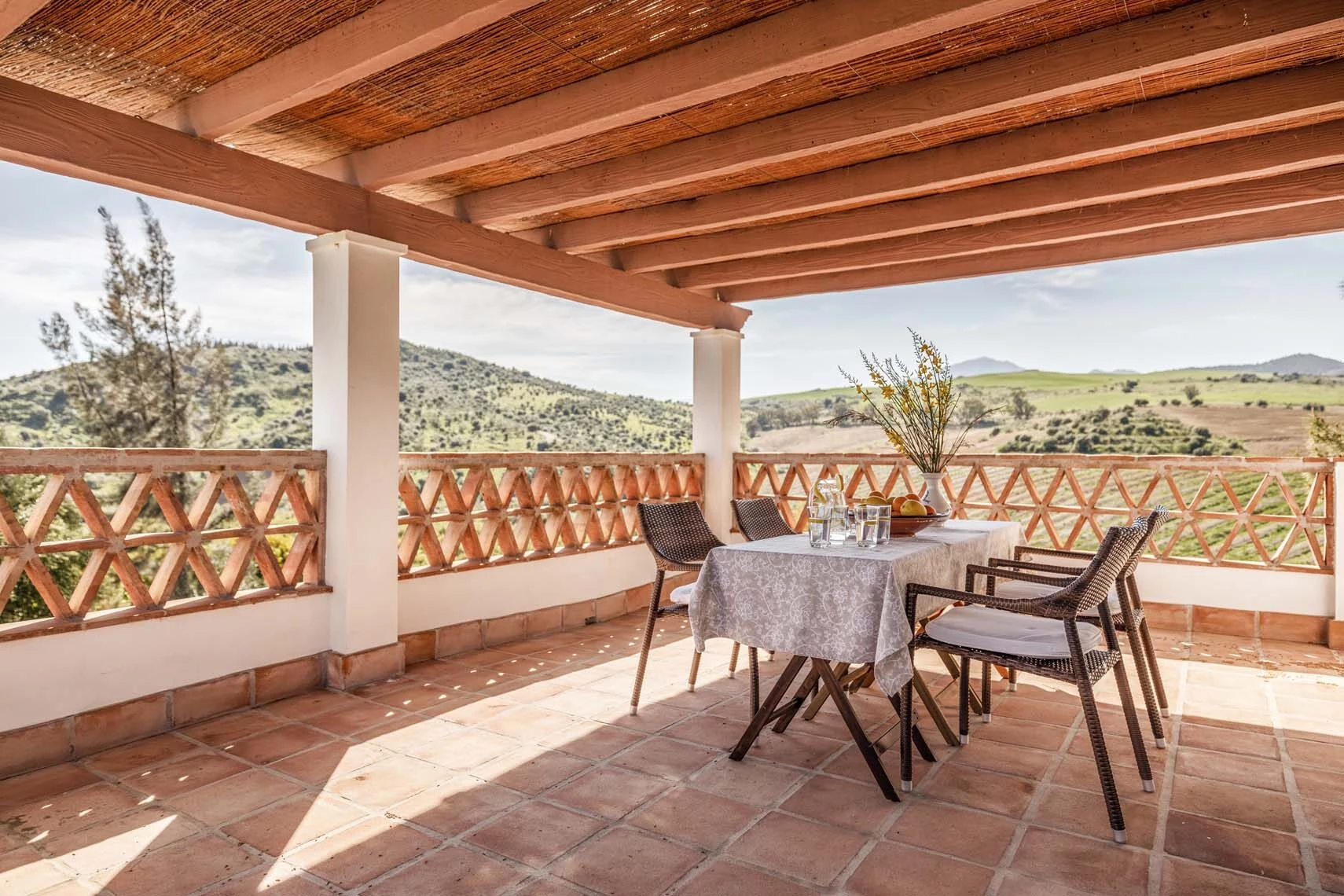
At Rosas Cantares, a private 660-hectare estate of ten individually restored stone farmhouses in the Guadalhorce Valley, autumn is not an afterthought season. It is arguably the best version of the property — cooler days, working olive groves, empty trails and a rhythm of life that summer simply doesn’t allow room for.
Anyone who has spent a August in inland Andalusia knows the trade-off: spectacular light, but heat that keeps you indoors for much of the afternoon, and a coastline packed with families on school holidays. October changes the equation entirely. The countryside is quieter because the volume of visitors drops sharply once summer ends, even though the weather is still warm enough for long lunches on a terrace and full days outdoors. Restaurants in nearby villages have tables again. The Caminito del Rey, 24 km from the estate, can be booked without the queues that build up in July and August. For UK travellers who value a destination without competing for it, this is the more intelligent version of an Andalusian holiday — the same landscape, without the crowd.
Daytime temperatures in the valley typically sit between 20 and 26°C in October, easing to a milder 17 to 22°C through November — warm enough for outdoor breakfasts and evening walks, cool enough that the midday heat of summer is no longer a factor in planning the day. The first rains of the season arrive in these months too, brief and infrequent, and they do something the dry summer months cannot: they bring the landscape back to life. Olive groves shift from a dusty silver-green to a deeper, richer tone, and the surrounding sierra recovers a freshness that has been missing since spring. Several of the estate’s stone farmhouses have working fireplaces, so cooler evenings become part of the appeal rather than something to plan around.
Workation in Andalusia: which finca houses actually have a workspace?
From November, Rosas Cantares moves into its olive harvest, one of the most authentic experiences the estate offers and a natural extension of its wider agrotourism story. The estate’s 660 hectares are farmed organically, and the harvest itself is real agricultural work rather than a staged photo opportunity: olives picked by hand or with poles, then pressed promptly to preserve the low acidity that defines a well-made extra virgin oil. Guests staying at the finca during this period are close to a working rhythm that has changed very little in this region for centuries — a detail that resonates particularly with travellers who want more from a countryside stay than a pool and a view. Guests interested in seeing the harvest or the pressing first-hand are welcome to ask the team directly about what is possible during their dates.
The estate itself holds more than 15 km of private trails through olive groves, pasture and open countryside — walkable in comfort in October and November without the midday heat that makes summer routes a dawn-or-dusk proposition. Beyond the estate boundary, the Caminito del Rey, one of Spain’s most photographed gorge walks, is 24 km away and noticeably calmer once the summer footfall thins out; afternoon light on the limestone walls is also better suited to the lower autumn sun. The whitewashed villages scattered across the valley, along with weekly markets in towns like Álora and Pizarra, add an easy half-day option for guests who want a change of pace between longer walks. For a valley just 35 minutes from Málaga Airport, the combination of private trails and nearby classic routes gives autumn visitors a genuinely varied walking week without needing a car every day.
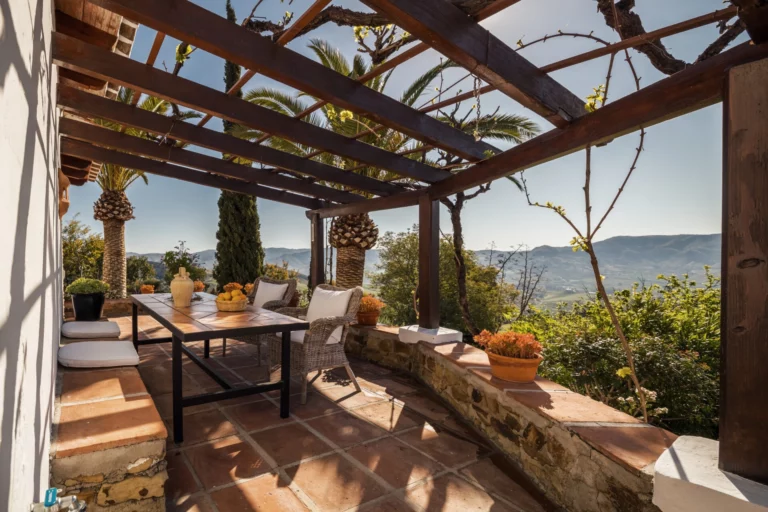
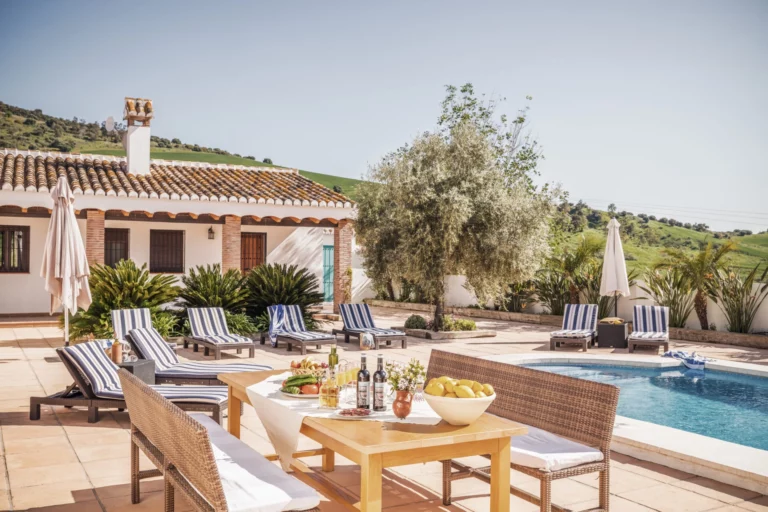
A summer stay at Rosas Cantares is built around the pool, the terrace and the shade of the pergola in the hottest hours of the day. An autumn stay is built around the outdoors in a different way — full days of walking, working olive groves rather than a still landscape, fireplace evenings instead of late-night heat, and a much quieter version of the same estate. It also suits a different pace of travel: longer stays, slower mornings, and time spent with Francisco, the estate’s host, whose knowledge of the land and its seasons is one of the property’s most distinctive features for guests who want more than a rental key handed over at arrival. For UK couples weighing up a second, less obvious trip to Spain this year, autumn in Andalusia offers a version of the country that August visitors rarely see.
Q: What are the temperatures like at Rosas Cantares in autumn?
A: Daytime highs are typically 20–26°C in October and 17–22°C in November, with occasional brief rain that refreshes the landscape rather than disrupting a stay.
Q: Can guests take part in the olive harvest during their stay?
A: This depends on the exact dates of your visit and the team’s capacity during harvest work. Guests who would like to see or take part in the harvest are encouraged to ask the team directly and in advance.
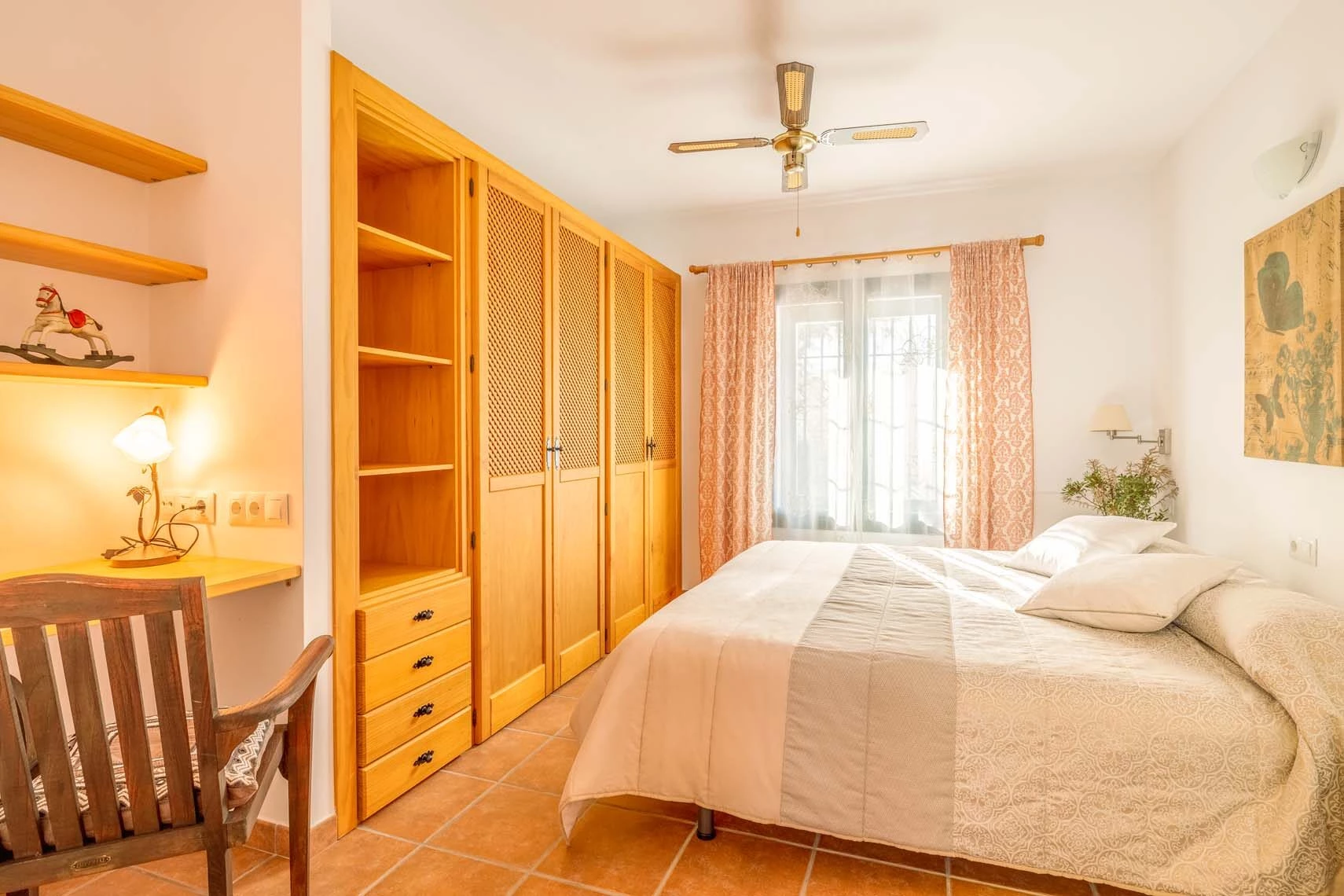
There’s a particular dread that sets in around October: shorter days, the heating bill creeping up, three more months of grey before spring. A three-month rental in a private Andalusian cortijo solves both the light problem and the boredom problem at once.
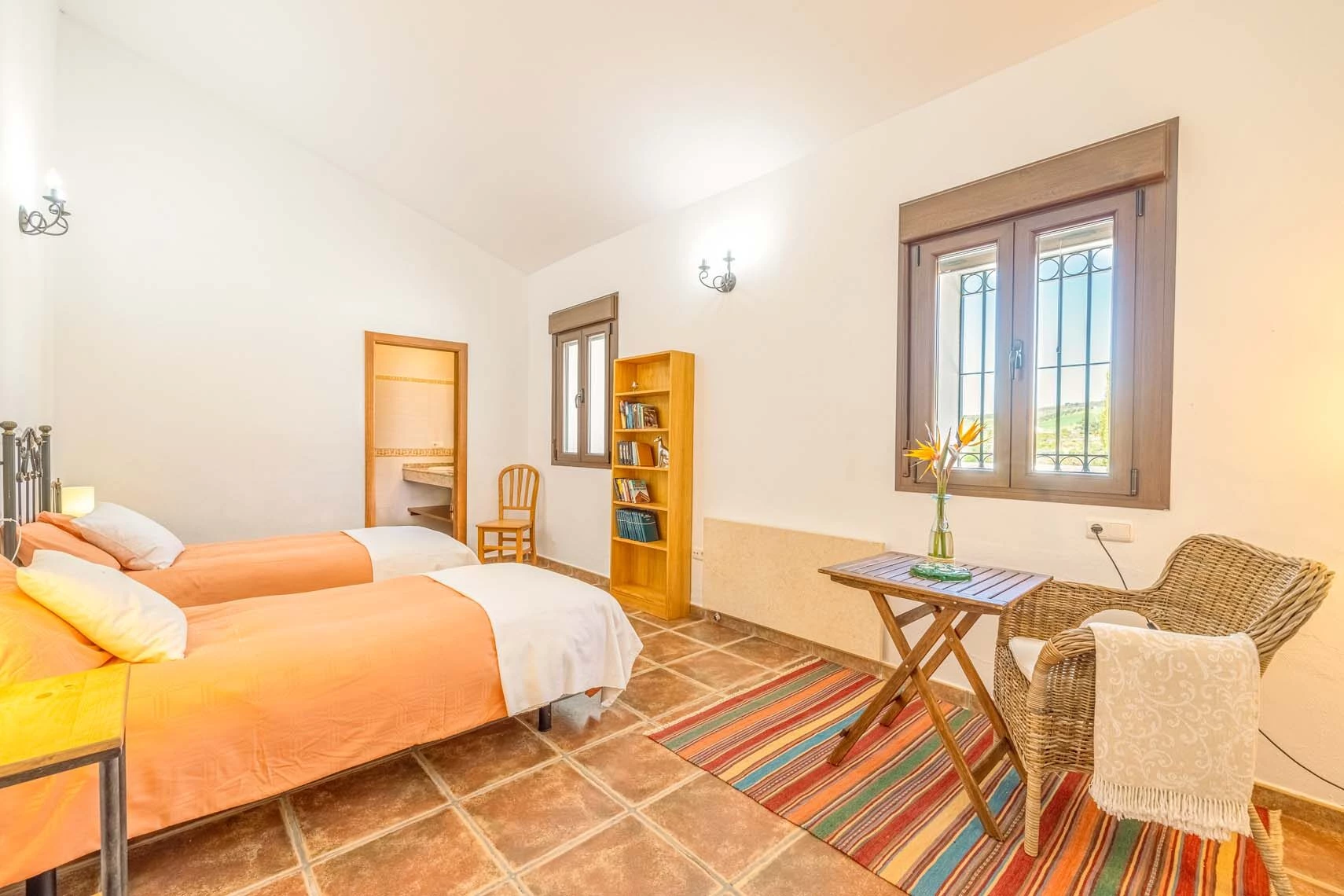
Workation searches from the UK have grown steadily over the past two years, and the profile behind them is specific: professionals or couples in their late thirties to fifties who can work from anywhere for two, three, sometimes six weeks at a time, and who are done with generic co-living blocks in Lisbon or Málaga city. What they are looking for instead is somewhere that still functions as a proper base for video calls and deadlines, but doesn’t feel like an office with better weather. A workation in Andalusia at a private cortijo is built around exactly that balance — and it looks quite different from either a city apartment or a beach resort.
August is the month when UK travellers quietly start planning their fourth quarter — and this year, autumn in Andalusia deserves a place on that list well before the October booking surge begins. Most British visitors think of southern Spain as a July and August destination, all heat and crowded coastline. That is precisely why the season is so undersold: while the Costa del Sol empties out after the school holidays, the Guadalhorce Valley moves into its most comfortable, most atmospheric months of the year.
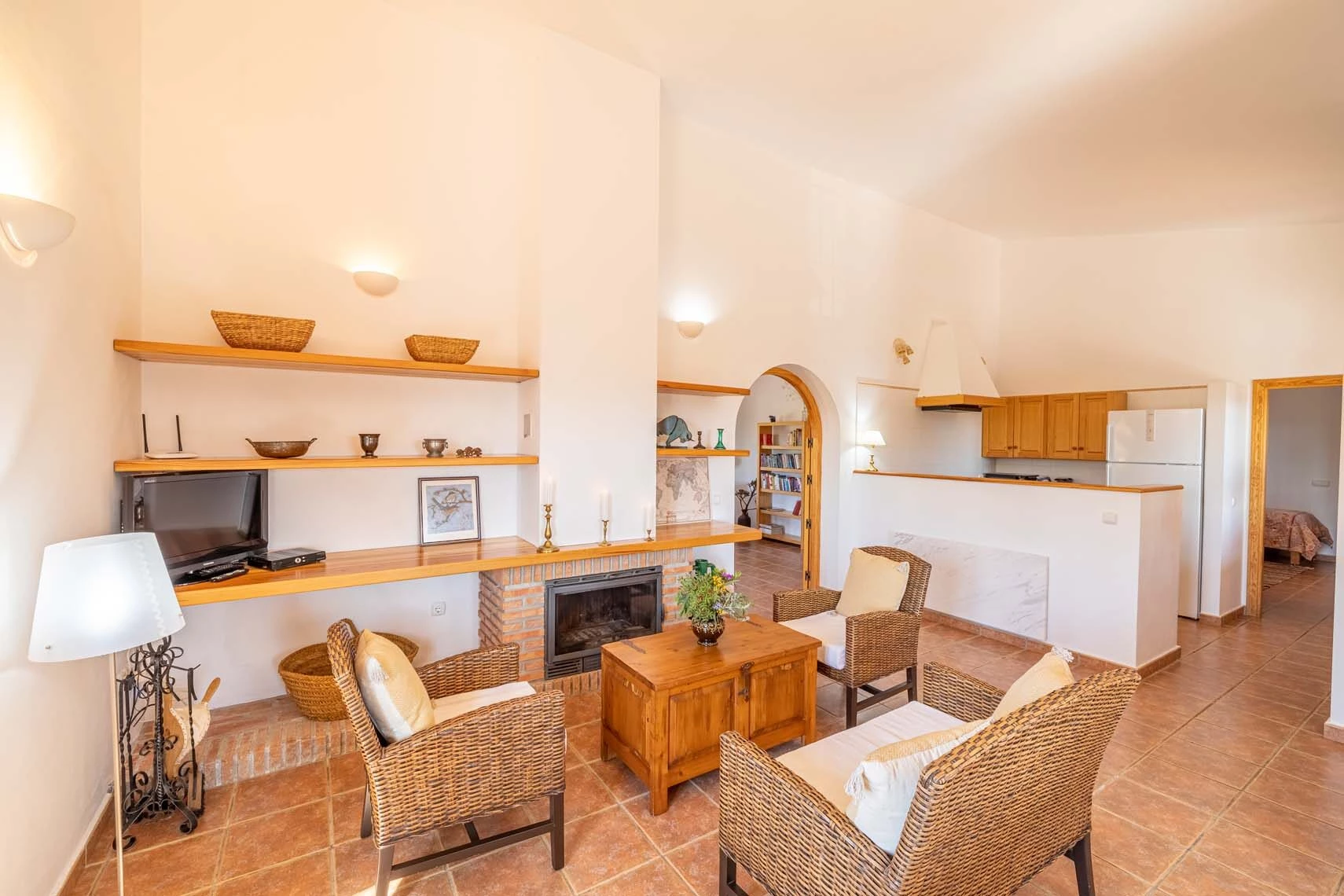
Workation in Andalusia usually conjures up a co-working space in a city apartment. On Rosas Cantares it means something different: a private finca in the Guadalhorce Valley, thirty-five minutes from Málaga Airport, where four of the ten houses have a dedicated desk and every house on the 660-hectare estate has WiFi installed.
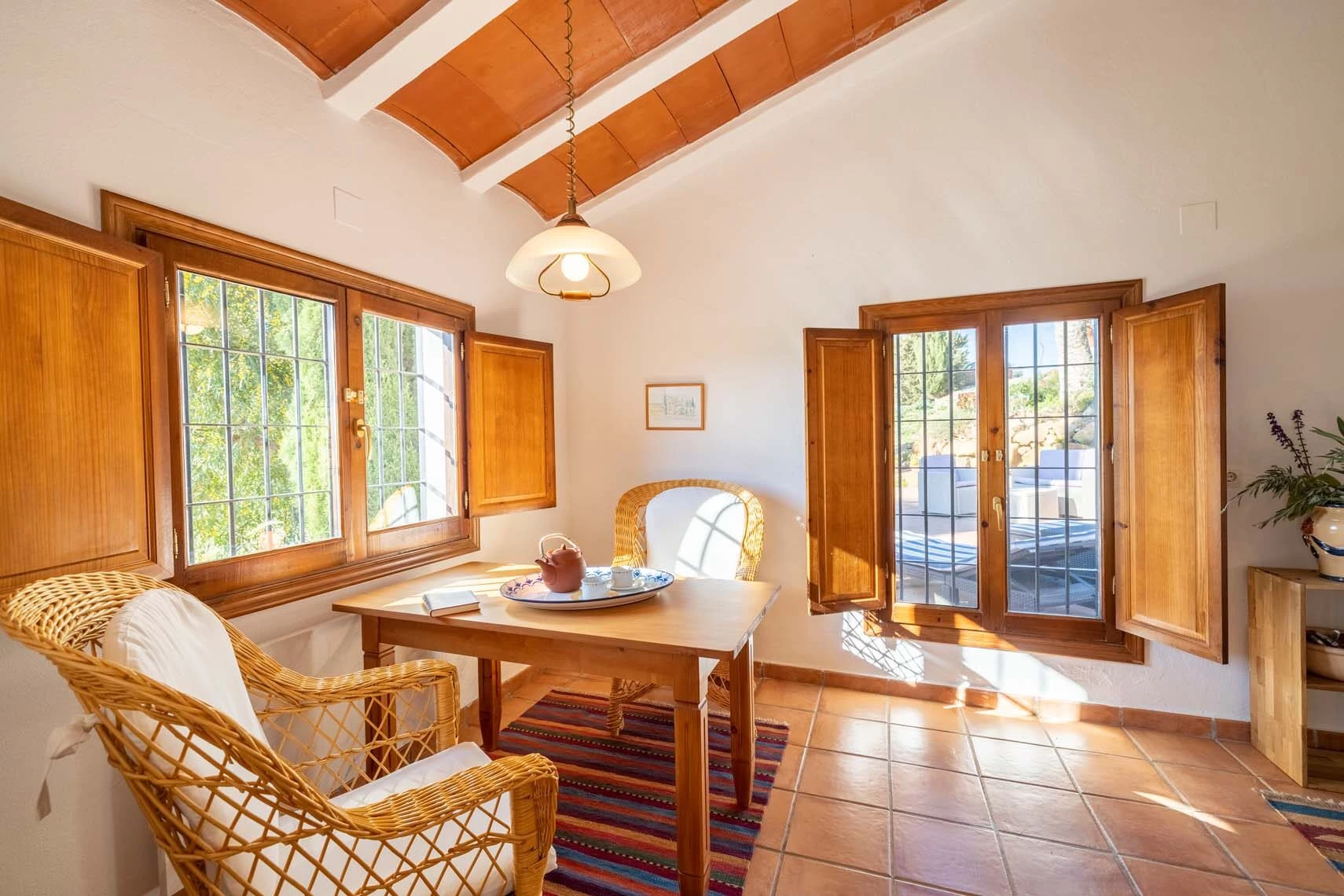
Long winter rental in Andalusia means something specific: a fully equipped farmhouse near Málaga, available by the week or month, with a fireplace for the evenings and 320 days of sunshine outside. This is what renting a cortijo for winter actually involves — the houses, the practicalities and what changes when you stay long enough to stop being a tourist.
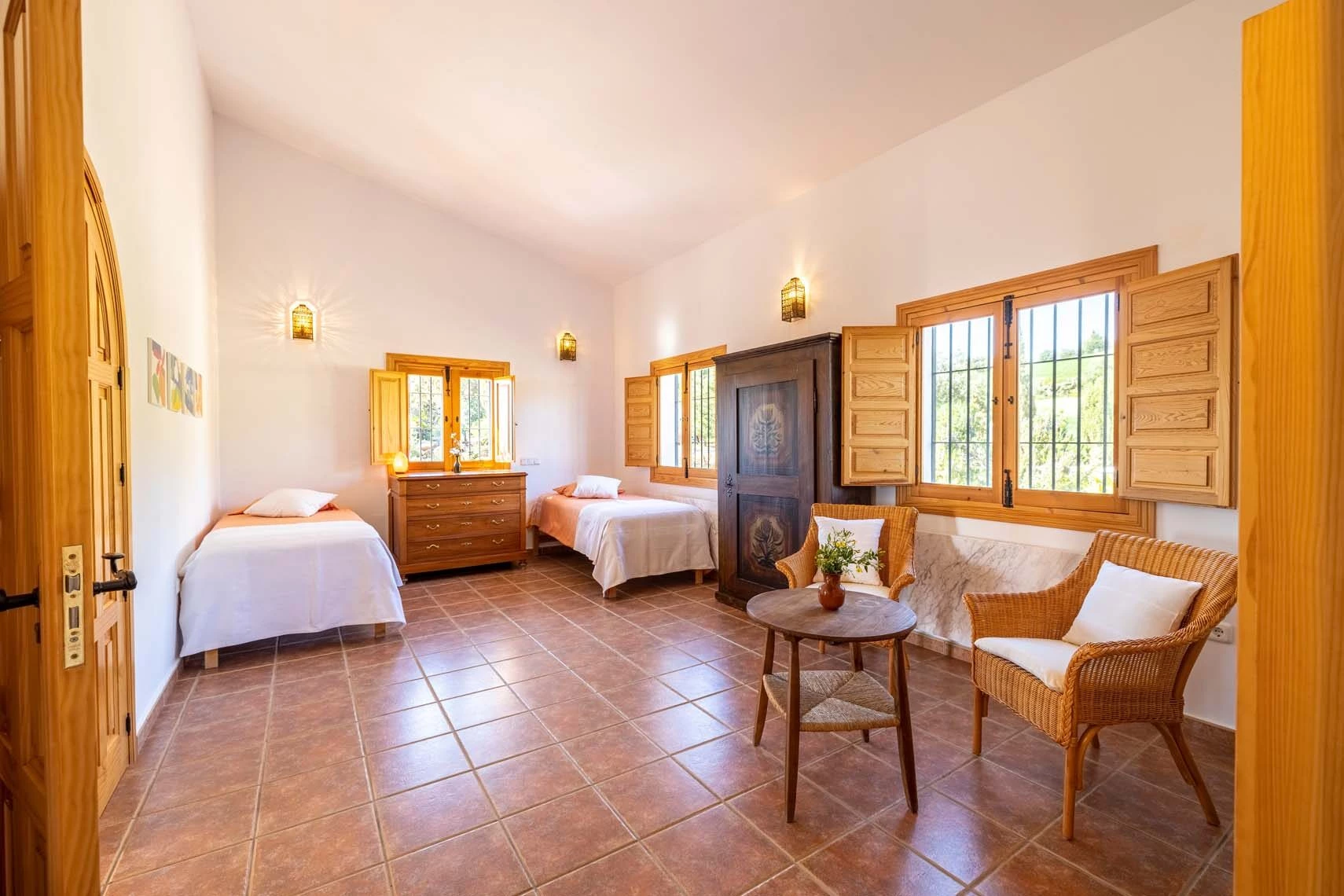
Winter in southern Spain is not what most British couples expect — and that is precisely the point. The Guadalhorce Valley runs inland from the Costa del Sol, far from resort crowds, with temperatures between 15 and 19°C from November to March, local food worth seeking out, and the Caminito del Rey on your doorstep. This is what a long winter break in Andalusia actually looks like.