Winter in southern Spain surprises most people the first time. Not the grey, rainy Portugal-in-November surprise. The other kind — stepping off a short flight from Gatwick or Manchester into 17°C of dry, clear air and thinking: why have we been going to Tenerife all these years?
The answer, for most British couples, is that the Canaries are easy to find. Southern Spain inland is not. But the Guadalhorce Valley — a stretch of countryside 35 minutes north of Málaga Airport, flanked by olive groves and limestone gorges — is exactly the kind of place that rewards people who look a little further.
The Canaries work. They are warm, the flights are straightforward, and you know what you are getting. But there is a difference between warm-enough and genuinely warm, and there is a wider difference between a resort strip in November and a valley where real Andalusian life carries on around you.
Spending winter in Andalusia means daytime temperatures between 15 and 22°C from November through March. It means fewer than 40 days of rain across the entire winter season, and an average of around 320 days of sun per year across the Málaga province. It also means no humidity, no crowds, and no sense that the place you are staying was designed specifically so that tourists would not need to leave it.
For a couple in their fifties, sixties or seventies who want warmth without the packaged feel of a resort, that difference matters. The Canaries will not run out of takers. But Andalusia offers something the islands cannot: countryside, culture, food, and the sense that you have actually arrived somewhere.
Inland Málaga sits in a basin sheltered from Atlantic weather by the Sierra de las Nieves to the northwest and the coastal range to the south. The result is a microclimate that is measurably warmer than the coast in winter mornings and cooler than the coast in summer afternoons. From November to February, average daily highs run between 16 and 19°C, with nights rarely dropping below 8°C. Frost is possible but uncommon.
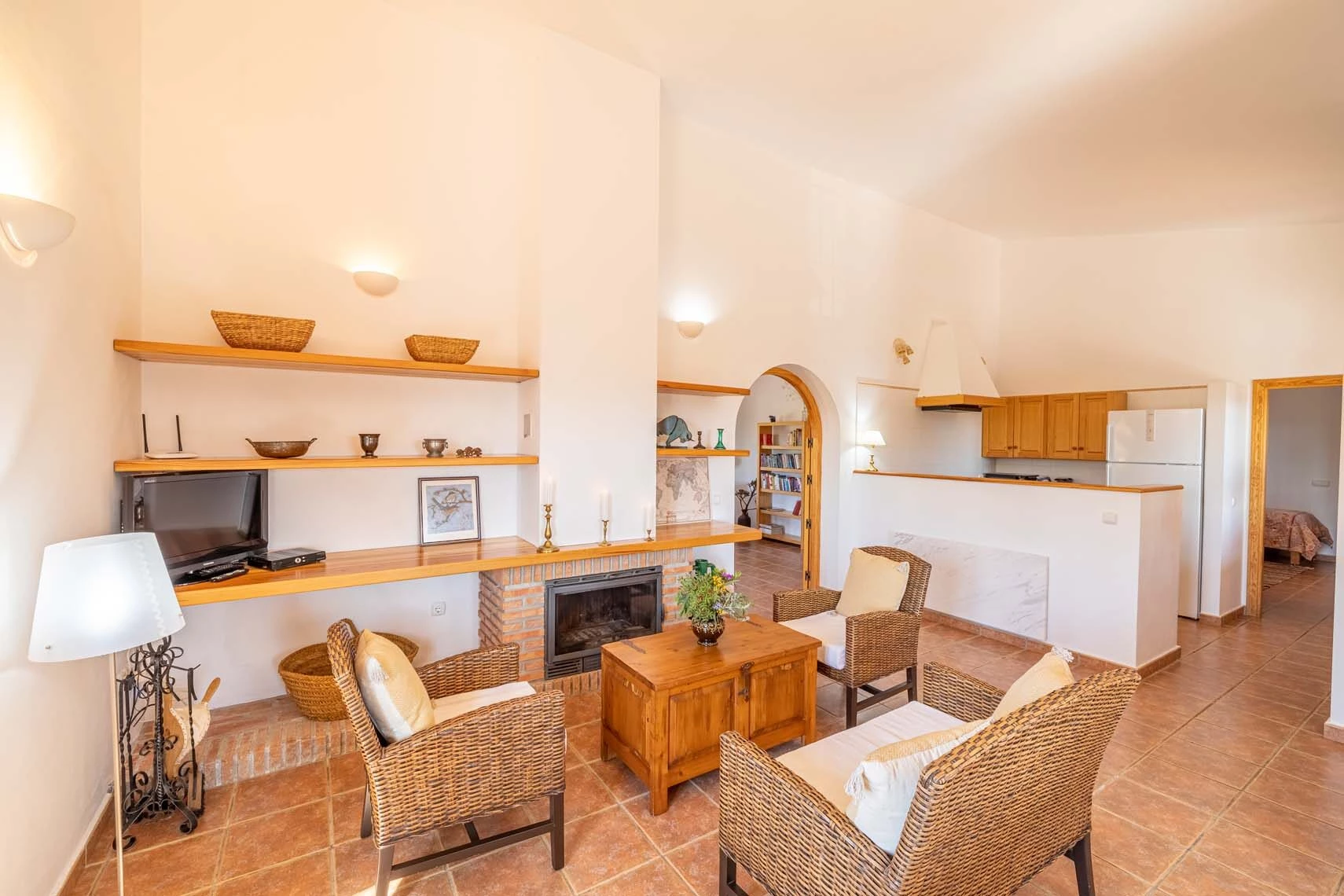
What that feels like in practice: lunch outside on a stone terrace in December. A fire in the evening — several of the farmhouses at Rosas Cantares have fireplaces, which changes the atmosphere of a winter stay completely. Walking in the morning through olive groves without needing more than a light jacket.
The valley itself is quiet in winter. The summer crowds that fill the Caminito del Rey and the white villages nearby have gone. What remains is the landscape at its most unhurried — deep green olive trees, red soil, the occasional smell of wood smoke from the village below. It is not dramatic. It is the kind of place you stop rushing through.
This is where southern Spain pulls away from most winter sun destinations. The Canaries have good food. Madeira has good food. But the Guadalhorce Valley in winter sits in the middle of one of the most productive agricultural zones in Andalusia, and the local food calendar reflects it.
The Mercado de Álora — held weekly in the town 13 minutes from the estate — is not a tourist market. It is where local farmers sell the season’s olives, citrus, almonds and seasonal vegetables to other local people. Going in December or January puts you in the middle of the olive harvest, when the groves around the estate are being picked and the air carries that specific sharp smell of freshly pressed oil.
The estate itself produces organic olive oil — the olive groves are part of the finca’s working land, and guests can see the harvest in progress during winter stays. There is a difference between olive oil you buy in a shop and oil pressed from trees you walked past that morning.
One dish worth finding in the villages around the valley: gazpachuelo malagueño. It is nothing like the cold gazpacho sold in tourist restaurants — this is a warm, delicate broth of fish, potato and mayonnaise that local families have been making through Málaga winters for generations. It does not appear on many menus outside the province. It is exactly the kind of thing that makes a long winter stay in Andalusia feel like you are somewhere real.
Twenty-four kilometres. From Rosas Cantares, the access point to the Caminito del Rey is under thirty minutes by car — closer than most guests expect.
The Caminito del Rey is one of the most spectacular walks in Spain: a restored mountain path cut into the limestone gorge above the Guadalhorce reservoir, with sections of boardwalk that hang over the river 100 metres below. In summer, it books out weeks in advance and fills with groups. In winter, you can often book a slot for the following morning. The light is different in winter too — lower, warmer, the gorge holding it differently than in high summer.
For a couple who enjoys walking but does not want to plan months ahead or queue, the combination of the Caminito del Rey in winter and a base 24 km away is one of the better-kept logistical secrets of the region.
Beyond the Caminito, the area around the valley offers walks of very different characters. The white village of Álora climbs up a hillside above a Moorish castle. Ardales is smaller, quieter, with the reservoir below it. The Sierra de las Nieves — a UNESCO Biosphere Reserve — starts within 40 minutes of the estate. None of it requires advance planning. All of it is empty in winter.
This is, in the end, the question that decides whether a winter escape in Andalusia works for a particular couple — and the honest answer is yes, but only if the base is right.
A long winter break in Spain built around a beach hotel puts you twenty minutes from the nearest good walk, and in a place designed for summer. A farmhouse in the Guadalhorce Valley puts you inside the landscape. The private estate at Rosas Cantares covers 660 hectares, with trails through the olive groves that you can walk without a map. The Caminito del Rey is half an hour away. The Mercado de Álora is a 13-minute drive. Málaga city — with its Picasso Museum, the Alcazaba fortress, and one of the best-stocked covered markets in southern Spain — is 35 minutes from the airport, and from the estate.
The mix works because the distances are honest. This is not a part of Spain where you need a hire car and a full day to do anything. From the valley, most of what makes a winter stay in Andalusia good is within forty minutes. The rest — the evening fire, the terrace, the oil from the trees outside — is already there.
If you and your partner are considering a longer winter stay rather than a single week — two months in a farmhouse rather than seven days — the options are different again. Our guide to extended winter stays in Andalusia covers what that looks like in practice, including flexible booking periods and what changes when you stop counting days.
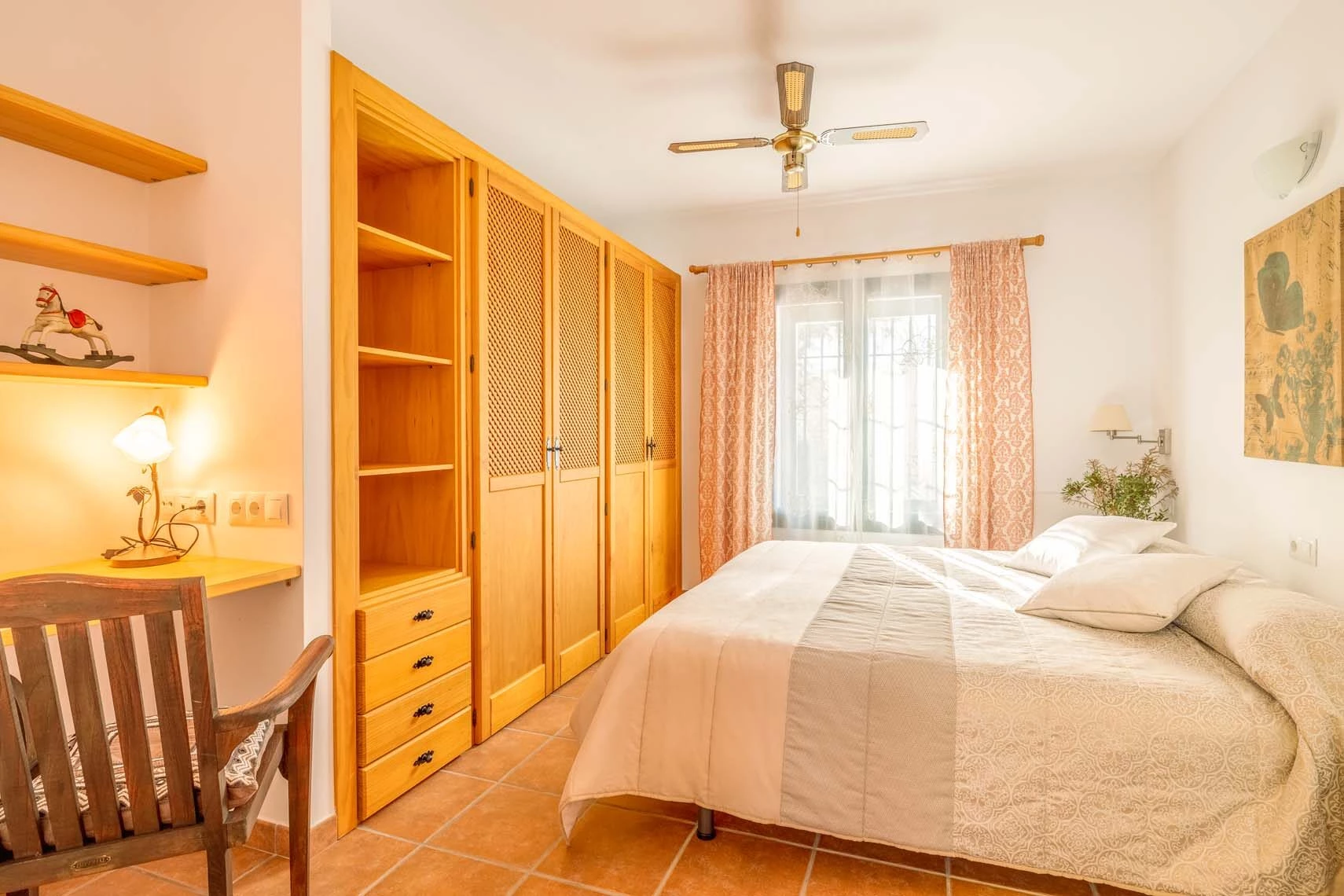
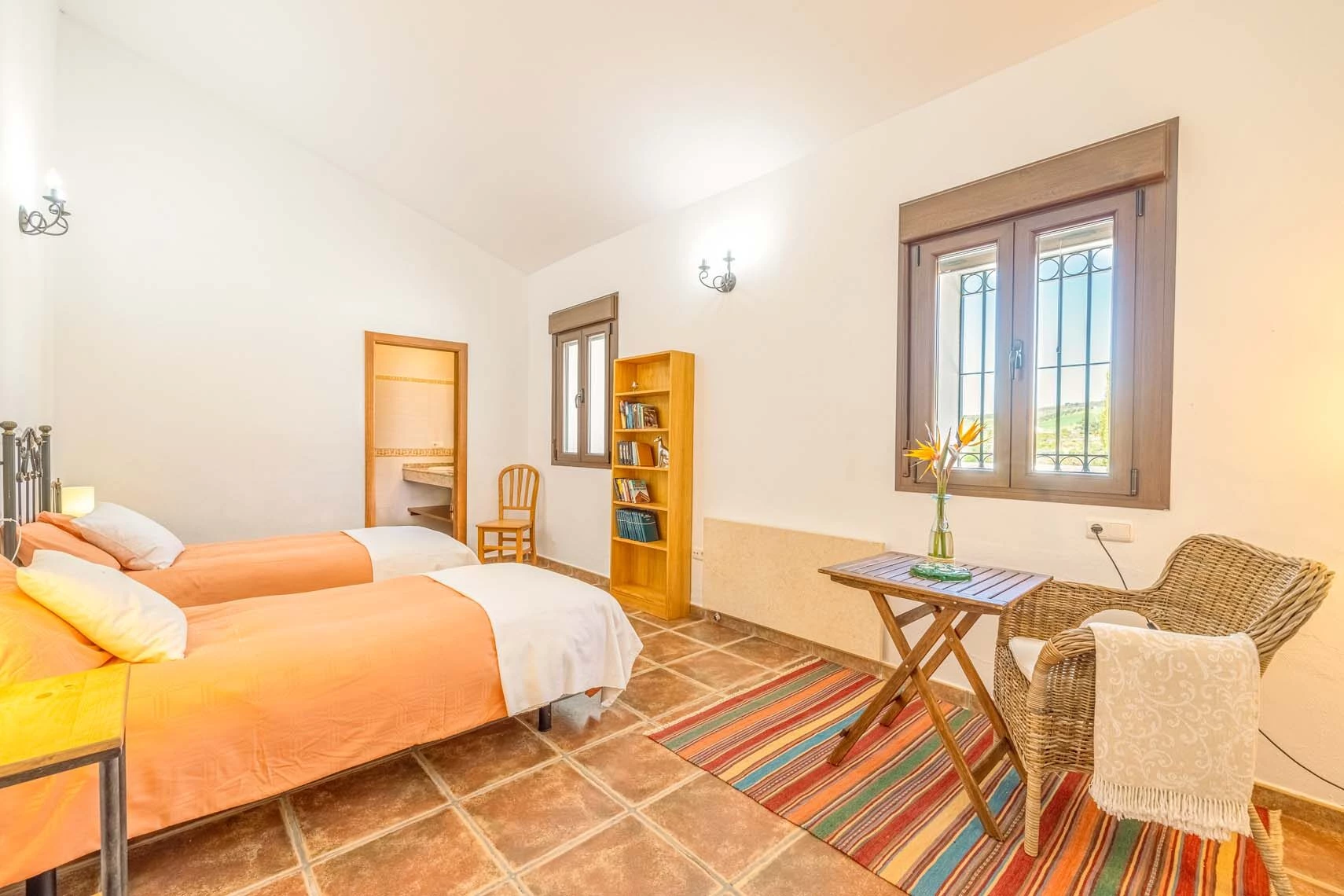
Christmas in Andalusia solves a problem that most families recognise long before they admit it: there are too many of you for one house and too few of you to want a hotel. Twelve people in a rented apartment is not a tradition, it is a compromise. On a 660-hectare estate in the Guadalhorce Valley, thirty-five minutes from Málaga Airport, the alternative is ten individually restored farmhouses that can be booked one at a time or combined — so everyone eats together and nobody shares a bathroom.
There’s a particular dread that sets in around October: shorter days, the heating bill creeping up, three more months of grey before spring. A three-month rental in a private Andalusian cortijo solves both the light problem and the boredom problem at once.
Workation searches from the UK have grown steadily over the past two years, and the profile behind them is specific: professionals or couples in their late thirties to fifties who can work from anywhere for two, three, sometimes six weeks at a time, and who are done with generic co-living blocks in Lisbon or Málaga city. What they are looking for instead is somewhere that still functions as a proper base for video calls and deadlines, but doesn’t feel like an office with better weather. A workation in Andalusia at a private cortijo is built around exactly that balance — and it looks quite different from either a city apartment or a beach resort.
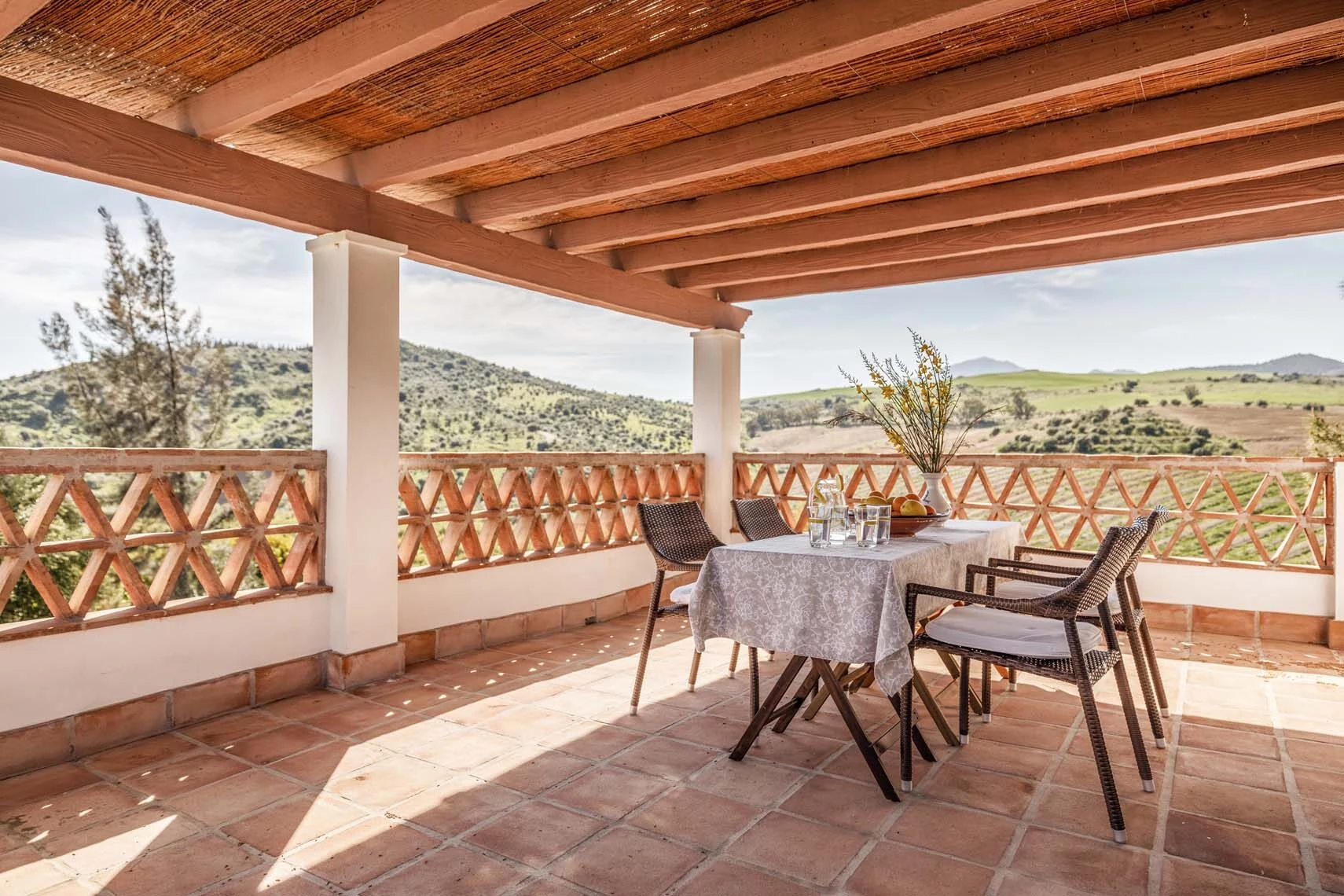
August is the month when UK travellers quietly start planning their fourth quarter — and this year, autumn in Andalusia deserves a place on that list well before the October booking surge begins. Most British visitors think of southern Spain as a July and August destination, all heat and crowded coastline. That is precisely why the season is so undersold: while the Costa del Sol empties out after the school holidays, the Guadalhorce Valley moves into its most comfortable, most atmospheric months of the year.
Workation in Andalusia usually conjures up a co-working space in a city apartment. On Rosas Cantares it means something different: a private finca in the Guadalhorce Valley, thirty-five minutes from Málaga Airport, where four of the ten houses have a dedicated desk and every house on the 660-hectare estate has WiFi installed.
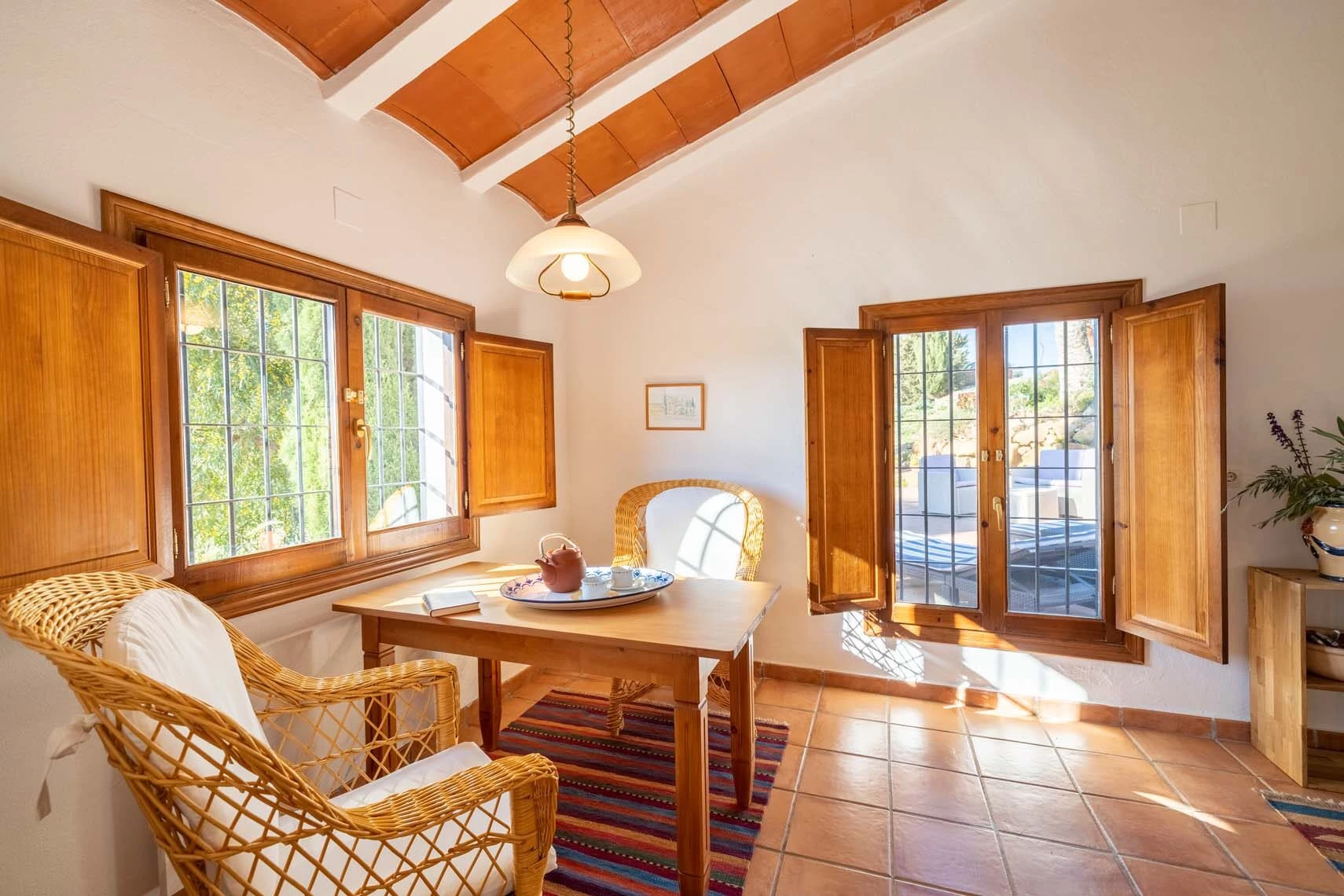
Long winter rental in Andalusia means something specific: a fully equipped farmhouse near Málaga, available by the week or month, with a fireplace for the evenings and 320 days of sunshine outside. This is what renting a cortijo for winter actually involves — the houses, the practicalities and what changes when you stay long enough to stop being a tourist.